
After a stroke, many people can go home and carry on their recovery there. The NHS stroke team plans the discharge, and some people get early supported discharge: rehabilitation at home from a specialist team. Day-to-day support with washing, dressing, meals, moving safely and practising the exercises set by therapists can come from family, visiting carers or a live-in carer, who works alongside the NHS team.
Key facts
- About 100,000 people have a stroke in the UK each year; about 1.3 million live with its effects (Stroke Association, 2024).
- Early supported discharge gives hospital-level rehabilitation at home when it is safe.
- Council-arranged reablement is free for up to six weeks.
- Therapy is led by the NHS team; carers help practise it day to day.
- Recovery often continues for months, so plans should be reviewed.
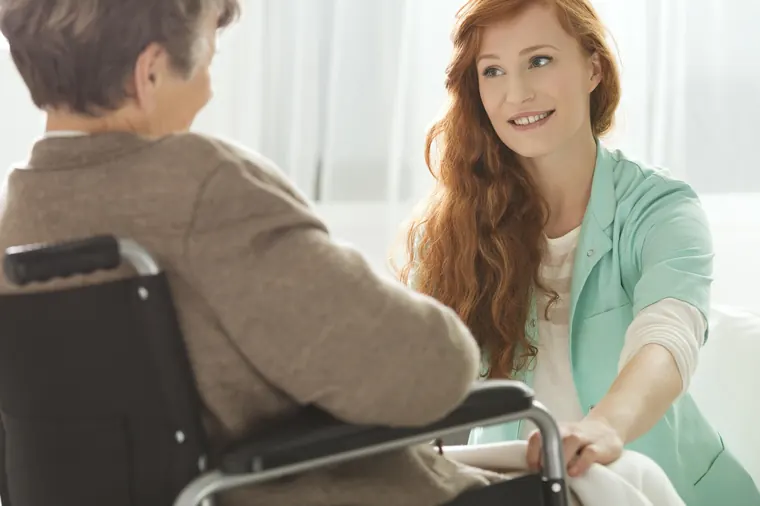
Leaving hospital after a stroke
The stroke team plans when and how someone goes home. You should be involved, and so should any family carer. Ask:
- Will there be early supported discharge (a specialist stroke team providing rehabilitation at home) or another rehabilitation service?
- What help will be needed with washing, dressing, toileting, eating and moving?
- Is equipment needed before the day of discharge, and who is arranging it?
- What medicines are prescribed, and what are the follow-up appointments?
- Who do we call if we are worried after we get home?
Our hospital discharge checklist has the full list of questions.
Common effects of a stroke and the help they need
| Effect | Day-to-day help that makes a difference |
|---|---|
| Weakness on one side | Help getting up, washing and dressing; safe walking with the right aid; practising therapy exercises |
| Tiredness (fatigue) | Pacing the day, rest built into the routine, help with tasks that drain energy |
| Speech and language difficulties | Time and patience, short questions, tools suggested by the speech and language therapist |
| Swallowing difficulties | Following the texture and positioning advice from the speech and language therapist |
| Memory, concentration and mood | Routine, reminders, company, noticing low mood and telling the GP |
| Higher risk of falls | A safe home, help at risky moments such as night-time toilet trips; see preventing falls |
Who does what
- NHS stroke team and therapists: rehabilitation, therapy plans, medical follow-up.
- GP: medicines, blood pressure and ongoing health.
- Council: needs assessment, reablement (free for up to six weeks) and longer-term care if eligible.
- Family and carers: daily support, encouragement, practising exercises, noticing changes.
How live-in care can help
After a stroke, a lot of support is needed in short bursts across the whole day: getting up, toileting, meals, exercises, a rest, a walk, getting ready for bed. Live-in care means one trained carer is there throughout the day to help at each of those moments, works alongside the NHS team, and keeps the family updated. It can be short term while someone recovers, or longer term. Live-in carers need daily breaks and a night's sleep, so if regular help is needed at night that is planned separately.
Pinnacle provides live-in care in Chester and Cheshire West, and elsewhere in England after an assessment. We work alongside GPs, community therapists and hospital discharge teams, who keep responsibility for clinical care. Read about care after hospital discharge or contact us.
Getting the home ready
- Ask for an occupational therapy assessment for equipment and changes.
- Clear walkways, remove loose rugs and add lighting to the route to the toilet.
- Consider a bed downstairs for the first weeks if stairs are hard.
- Keep a folder with the discharge letter, medicines list and contact numbers.
Looking after yourself
Caring after a stroke is demanding, especially in the first weeks. Ask the council for a carer's assessment, and accept help early rather than waiting until you are exhausted. The Stroke Association runs a helpline and local support for stroke survivors and families.
Frequently asked questions
Can someone go home straight after a stroke?
Many people do, once the stroke team agrees it is safe. Some go home with early supported discharge, where a specialist stroke team continues rehabilitation at home. Others go home with reablement, visiting carers or live-in care, or spend time in a rehabilitation unit first.
What does a live-in carer do after a stroke?
A live-in carer helps with personal care, getting up and dressed, meals and drinks, moving around safely, medicine reminders, appointments and company, and encourages the exercises the physiotherapist or occupational therapist has set. Clinical care and therapy stay with the NHS team.
Who pays for care after a stroke?
Council-arranged reablement after a hospital stay is free for up to six weeks. After that, care is means-tested by the council unless needs are mainly health needs and NHS continuing healthcare applies. Attendance Allowance or PIP can help with costs.
How long does stroke recovery take?
It is different for everyone. Many people improve most in the first months, but recovery can continue for much longer, which is why the care plan should be reviewed as things change.
What changes might we need at home?
An occupational therapist can advise on equipment such as rails, a raised toilet seat, a shower seat or a hospital bed downstairs, and on moving furniture to make space for a walking aid or wheelchair.
Sources
- Stroke Association: 51% increase in strokes predicted over the next 10 years (26 April 2024)
- NICE QS2: Stroke in adults, quality statement 4 (early supported discharge)
- DHSC / NHS England: Hospital discharge and community support guidance (updated 26 January 2024)
- NHS England: NHS continuing healthcare
This guide is general information about care in England. It is not financial, legal or medical advice. Figures were checked on 25 October 2026 and can change.