
Live-in care lets a couple stay together in their own home, with one trained carer living with them and supporting both partners. It usually works when the carer can meet both people's needs safely during the day and still get proper rest. If both partners need a lot of physical help, or someone needs regular help at night, two carers or extra support may be needed. Couples usually pay more than for one person, but often less than two care home places.
Key facts
- Couples stay together at home, with their routines, pets and neighbours.
- One carer can support both if the combined needs are manageable.
- Two-person tasks (such as some hoist transfers) need a second person.
- Each partner has their own needs and financial assessment with the council.
- Live-in carers need daily breaks and a night's sleep.
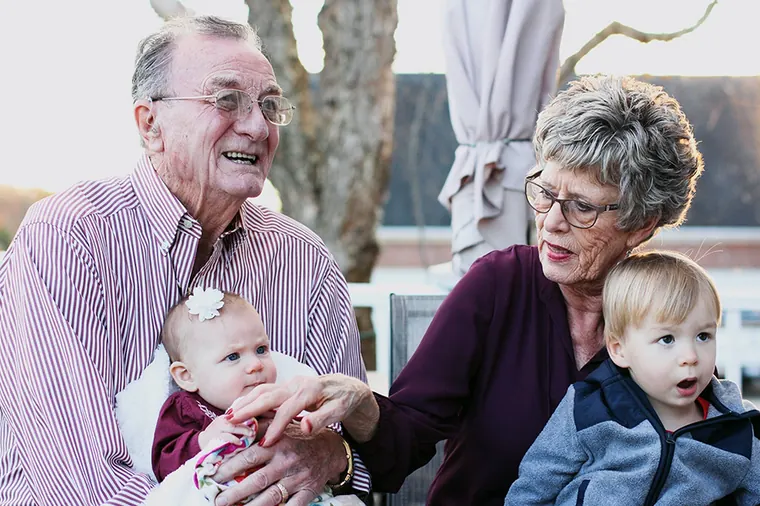
Why couples choose live-in care
- Staying together. Moving into a care home can mean separate rooms, or even separate homes if needs are different.
- Familiar routines. Same bed, same chair, same neighbours, and pets can stay.
- Taking pressure off the partner who cares. Often one partner has been caring for the other for years.
- One consistent carer who gets to know you both.
One carer or two?
| Situation | Usually |
|---|---|
| One partner needs most of the help; the other needs some support or company | One live-in carer |
| Both need moderate help at different times of day | One live-in carer, with the routine planned around both |
| Some tasks need two people (for example certain hoist transfers) | One live-in carer plus a second person at those times |
| Both need a lot of physical help, or one needs regular help at night | Two carers, or live-in care plus night support |
An honest assessment protects everyone. A carer who is up several times a night cannot safely look after two people the next day, so nights need to be planned for.
What it costs
The UK median for live-in care was about £1,610 a week for one person in September 2026 (Lottie). Couples are usually charged more because the carer is supporting two people, but they share one carer. By comparison, the average care home fee was £1,431 a week per person in the same quarter, so two places would cost about £2,860 a week. Prices vary by needs and area, so ask for a written price. See how much live-in care costs.
Funding for couples
- Separate assessments: each partner has their own needs assessment and financial assessment.
- Joint savings are usually treated as split equally between you.
- Your home is not counted when you receive care at home.
- Benefits: each partner may qualify for Attendance Allowance in their own right.
- The partner who cares can ask for a carer's assessment.
More detail in paying for care at home.
Practical things to plan
- A private bedroom for the carer, and time each day for their break (see preparing your home).
- Whose routine comes first in the morning, and how appointments are shared.
- Privacy and time alone together as a couple.
- What happens if one partner goes into hospital.
- Reviews as needs change, so the plan keeps working for both of you.
Questions to ask a provider
- Will you assess both of us, and write both of us into the care plan?
- How will you make sure the carer gets proper breaks and sleep?
- What happens if one of us needs more help at night?
- Is the service managed and CQC-registered?
- What exactly is included in the weekly price?
Pinnacle provides live-in care for couples in Chester and Cheshire West, and elsewhere in England after an assessment. Contact us to talk it through.
Frequently asked questions
Can one live-in carer look after two people?
Often, yes. One carer commonly supports a couple when one partner needs most of the help and the other needs some support or company, or when both need moderate help at different times of day. An assessment checks that the carer can meet both people's needs safely and still rest.
Is live-in care cheaper than a care home for a couple?
Often it is, because a couple shares one carer while a care home charges for two rooms. It depends on both people's needs, where you live and whether extra support is needed. Ask for written prices for both options.
What if only one of us needs care?
That is common. Live-in care can support the partner who needs help while taking pressure off the other, who often has been the main carer. The partner who is caring can ask the council for a carer's assessment.
What if one partner has dementia?
Live-in care can work well because routines stay the same and the carer gets to know you both. Plan for nights and for changes over time. See our guide to dementia and live-in care.
Does the council assess us together?
Each person has their own needs assessment and financial assessment. Savings held jointly are usually treated as split equally between you.
Sources
- Lottie: Home Care Cost Index Q3 2026
- Lottie: Care Home Cost Index Q3 2026
- GOV.UK: Social care charging for care and support 2026 to 2027 (17 February 2026)
- NHS: Carer's assessments
This guide is general information about care in England. It is not financial, legal or medical advice. Figures were checked on 25 October 2026 and can change.